
The challenge: Managing a complex service with legacy tools
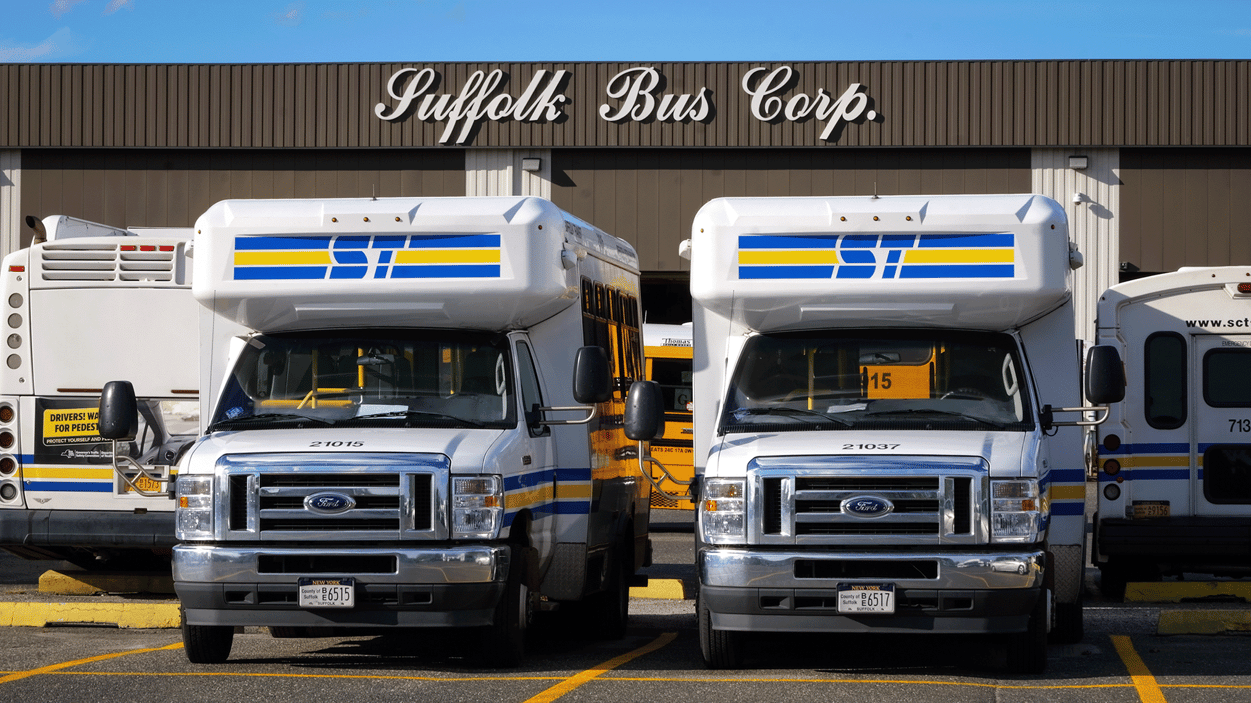
Suffolk Bus Corporation (SBC) serves a sprawling 911-square-mile area, providing approximately 2,500 rides every day. With long trip distances, complex geography, and a high volume of daily reservations, coordinating service was a significant operational undertaking.
SBC selected Via as it prepared to move away from Trapeze, looking for a more efficient way to manage scheduling and dispatch while maintaining the quality of service its riders depend on.
The existing process placed a considerable burden on staff, from manually determining the best way to accommodate trips to fielding calls from riders looking for updates on their vehicles.
“Our day-to-day prior to Via was a little chaotic. Phones ringing off the hook, people asking, ‘Where’s my bus? My bus is running late.’”
The solution: A connected platform, backed by hands-on support
Via worked closely with SBC to make the transition as smooth as possible, introducing new technology and workflows while ensuring staff had the training and support to use them confidently.
A supported transition for the entire team
A successful technology transition depends on the people using it. Via implemented a change management program that included one-on-one training for every role affected by the new platform, including drivers, reservationists, schedulers, dispatchers, and system administrators.
During launch, Via team members were on-site regularly and remained accessible to SBC staff by phone and text, helping troubleshoot issues and build confidence as the team adapted to new workflows.
“During launch, we had plenty of Via people here on a weekly basis. They were always available by text or phone call, pretty much 20 hours a day. They’re all very experienced individuals that made this transition possible.”
- Team member, SBC
A seamless migration of 30,000+ rider profiles
Moving to a new platform meant transferring a substantial amount of existing rider information. Via's data science team migrated more than 30,000 rider profiles, helping SBC make the transition without starting from scratch.
Less manual work for reservationists
Previously, reservationists had to manually determine where each new trip would fit into existing schedules. This required significant staff time and made it harder to consistently optimize routes across a large service area.
With Via, reservationists enter trip parameters and the platform generates an optimized solution. Routes are further optimized in the evening, reducing the manual planning required of staff and helping limit the time riders spend on board.
“Our reservationists used to have to manually figure out the best spot for a trip. With Via, that’s taken away. You put in the trip parameters, and it gives you the best solution. Then it’s all optimized in the evening. That created a big difference in limiting the time individuals sit on the bus.”
- Team member, SBC
Proactive communication that keeps riders informed
Previously, riders often called SBC to find out when their bus would arrive. Via helped replace that uncertainty with proactive notifications at key points in the journey.
Riders receive a call at 5 p.m. the evening before their trip, another notification when their vehicle is approximately 15 minutes away, and an alert when the bus arrives. They can also use the rider app to track their vehicle.
The result is fewer incoming calls from riders looking for updates and greater visibility into their upcoming trips.
“We have a lot less calls coming in because people know how far the bus is out.”
- Team member, SBC
Drivers equipped with tools they can trust
Introducing new technology also meant changing how drivers interacted with their daily schedules. Via equipped operators with tablets to access their trips and follow their routes, supported by training to help them become comfortable with the new workflow.
What initially felt like a big adjustment became a familiar part of their day-to-day work.
“Our operators were nervous about following tablets, but they feel very confident and comfortable with the system.”
- Team member, SBC
The impact: A better experience for staff and riders
For SBC, the transition to Via meant more than replacing a legacy platform. It introduced a more streamlined way to coordinate service, reduced manual work for reservationists, improved communication with riders, and gave operators the tools and training to work confidently.
And for riders, the difference is felt in the experience of booking and taking a trip.
“When I first started using the app, I said to myself, ‘This is a lot easier.’ I don’t know what I would do without a Paratransit system.”
- Rider, SBC
By bringing scheduling, dispatch, driver workflows, and rider communications together, Via helps SBC manage the complexity of its service while keeping the focus where it belongs: on the people who depend on it.
Modernize your paratransit operations
See how Via can help your team simplify day-to-day operations, improve the rider experience, and deliver more coordinated paratransit service.


