.png?width=1251&height=820&name=Copy%20of%20Event_1200x627%20(1200%20x%20820%20px).png)
For years, the transit industry has talked about the promise of fully connected, multimodal networks. But disconnected tools, siloed teams, and static data have kept the vision just out of reach.
That’s changing.
With the latest developments, you can connect every stage of the transit lifecycle—from planning and scheduling to live operations—using real-time insights to move faster and adapt continuously. Processes that once took months can now happen in moments.
Jump in and check it out!
- Planning: Turn insights into action
- Scheduling: Optimize supply across your network
- Operations: Give teams the visibility to act faster
- Data: Drive better decisions
Planning: Turn insights into action.
%20(1)%20(1).webp?width=2397&height=1640&name=Service%20Design%20Blog%20(2)%20(1)%20(1).webp)
It all starts with a plan. In a connected platform, planning isn’t based on last year’s report, it’s based on what happened this morning.
With Service Design, you can quickly update demand-response stops, adjust service areas, modify transfer points, and refine travel rules through an intuitive map-based interface — changes are real for riders instantly.
This winter, severe weather transformed previously successful microtransit stops into inaccessible snowbanks across the Northeast of the U.S. Using Service Design, a partner agency in New York was able to rapidly identify unsafe locations and adjust stops throughout the season to keep riders and drivers safe instantly.
Now, we are taking Service Design further — proactively surfacing AI-powered recommendations that help you improve service and stay ahead of safety issues.
New AI-powered stop insights help agencies identify problematic stops using signals like no-shows, late cancellations, and driver feedback. Teams can investigate locations using Street View and address issues before they escalate.
Ridership patterns reveal opportunities to expand zones for service access. If demand consistently appears just outside an existing service zone, planners can quickly adjust boundaries to connect more people to jobs, healthcare, and essential destinations.
The result: safer stops, smarter service areas, and faster decisions.
Scheduling: Optimize supply across your network.
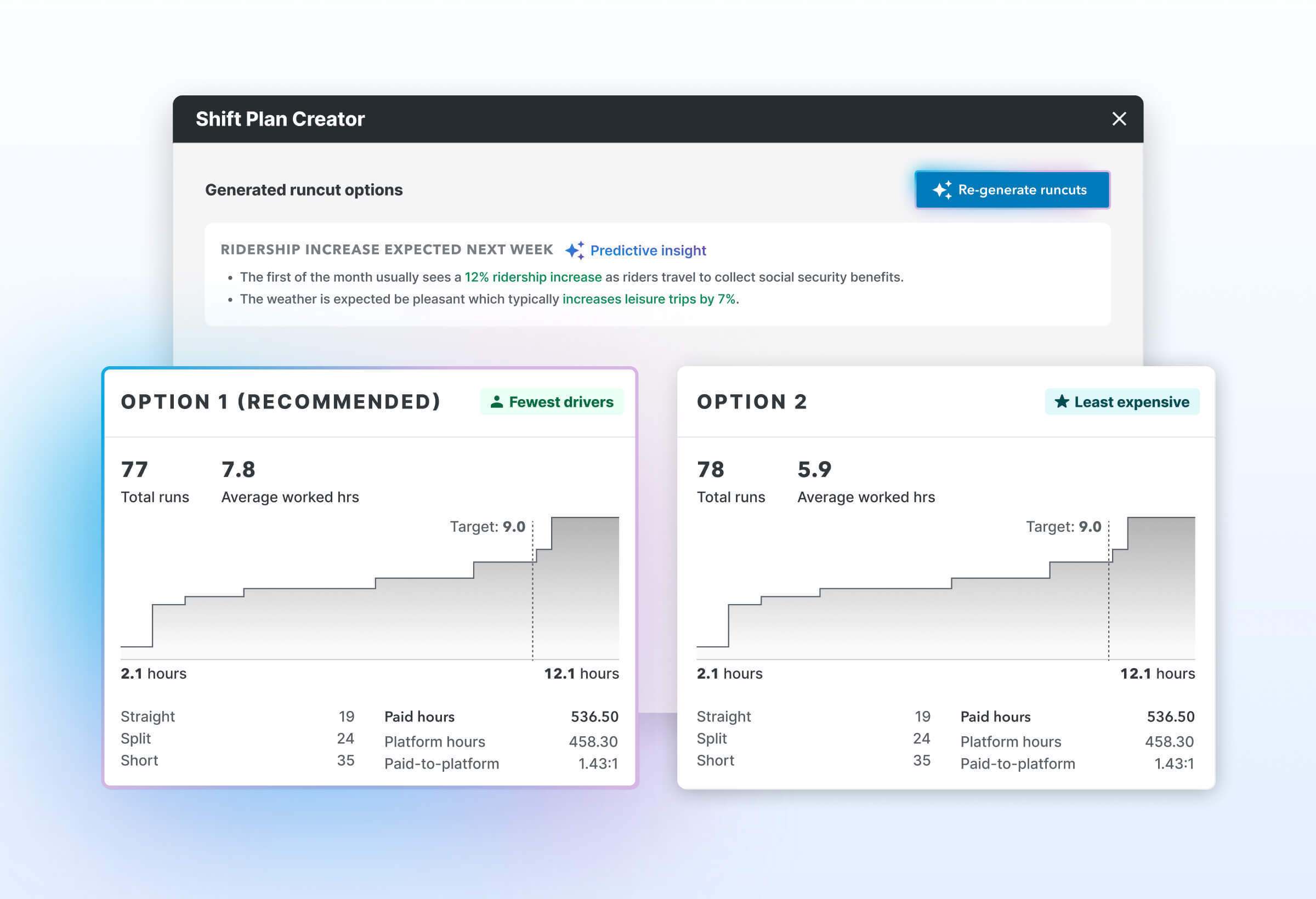
Once you've designed great service, you need the right people and vehicles to deliver it.
That's where Supply Studio comes in.
As the first multimodal scheduling solution, Supply Studio helps agencies align demand with available resources across fixed-route, paratransit, and microtransit services.
Teams can:
- Schedule vehicles and operators across multiple modes in one place
- Incorporate labor rules and operational constraints automatically
- Balance priorities like minimizing costs or reducing operator shortages
- Publish schedules directly into operations workflows
For one coastal agency, running paratransit over more than 900 square miles, right-sizing supply helped them maintain a 97% on-time performance target during peak summer demand—without adding any vehicles or drivers.
The result: more efficient operations using the resources you already have.
Operations: Give teams the visibility to act faster.
When service is live, things can change any second. Our latest operational enhancements help teams focus on what needs attention now.
%20(1).png?width=1200&height=900&name=live%20map%20(2)%20(1).png)
Dispatchers gain a real-time view of vehicles, shifts, and emerging disruptions, supported by proactive alerts that highlight issues before they cascade across the network in our Live Ops map.
%20(1).png?width=819&height=614&name=grouping%20mgt%20(2)%20(1).png)
Paratransit teams can streamline recurring trips with Ride Groups, making it easier to keep riders together, maintain consistent driver assignments, and reduce manual dispatch work.
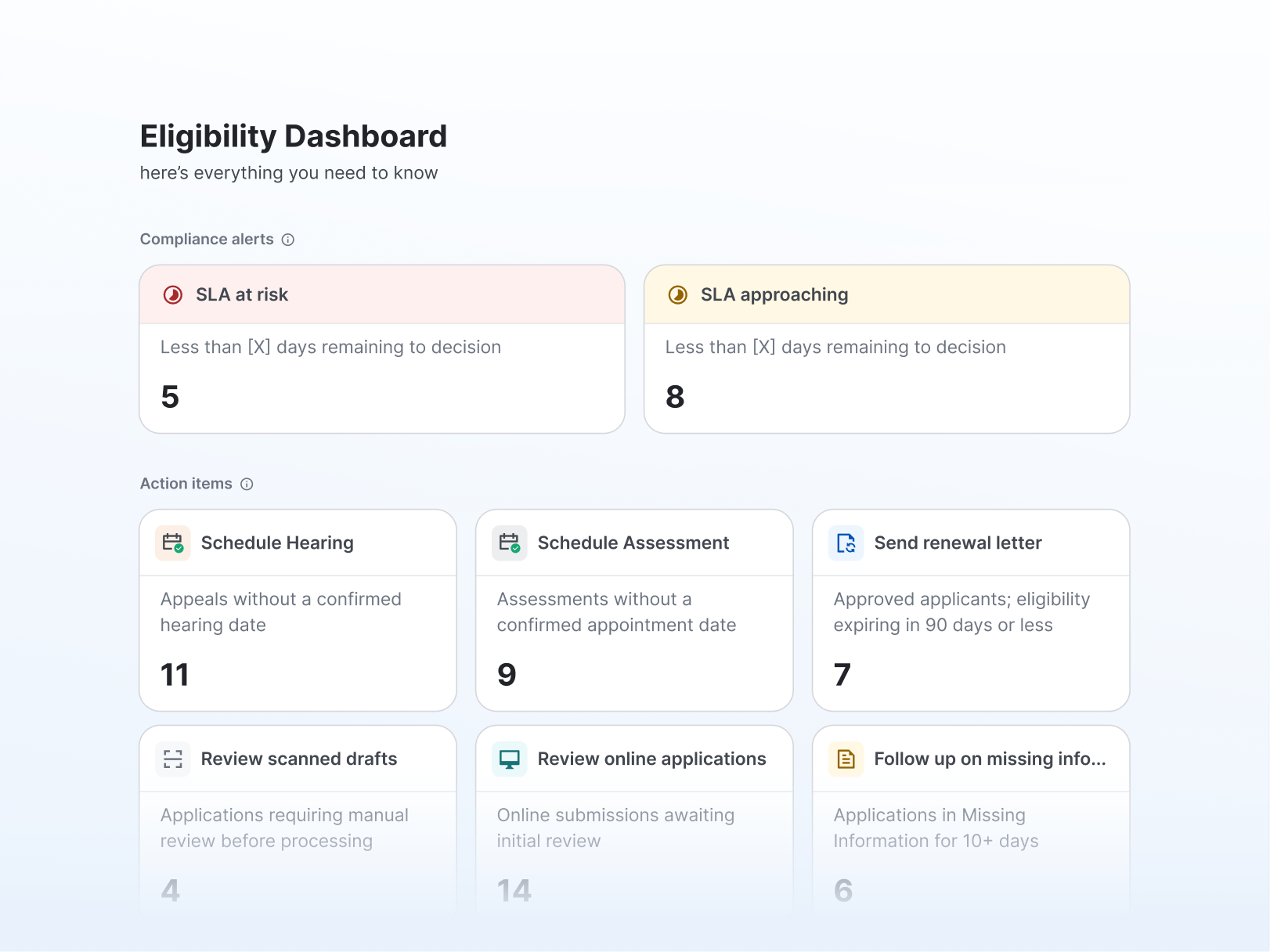
And with the Eligibility Management Platform, agencies can digitize application workflows, track ADA deadlines, manage caseloads, and help their teams focus on the most pressing items.
"The AI Scanning tool has been a game-changer. It's taken care of the routine, manual work and given us more time to focus on application reviews."
— Omilio Brown, Supervisor, Mobility On-Request, York Region Transit
The result: less administrative burden and more time focused on riders.
Data: Drive better decisions across your organization.
Operational data doesn’t have to live in spreadsheets. New dashboards help teams turn information into action.
.png?width=3840&height=2160&name=Frame%201618873233%20(1).png)
The Rider Experience Dashboard provides visibility into feedback trends, helping agencies identify issues early while recognizing drivers who consistently deliver exceptional service. Teams can even generate printable certificates celebrating five-star performance.
The result: stronger teams, safer operations, and a better rider experience.
What's next.
These developments represent an important step toward a more connected transit ecosystem—one where planning informs operations, operations improve planning, and data powers every decision in between.
And we're just getting started! 📩 Stay tuned for future showcase webinars by signing up for our newsletter.


