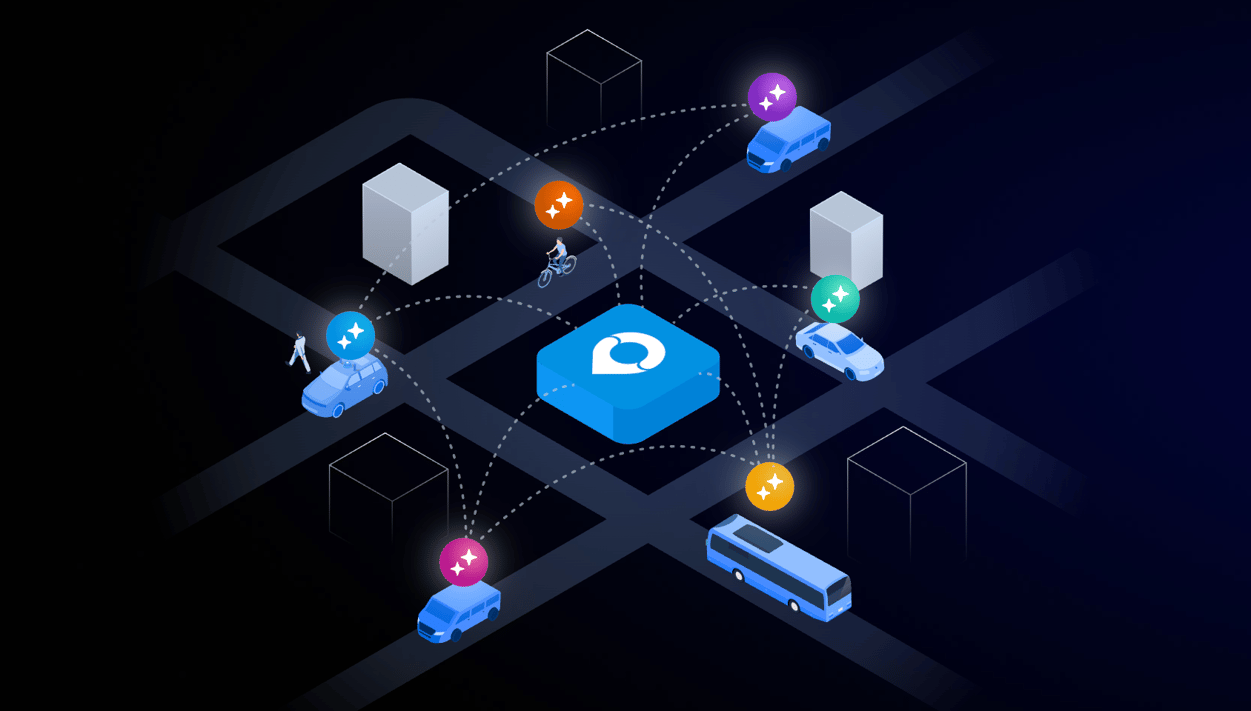
Mobility is a foundation of modern life; it’s what connects us to opportunity, stability, health, and to each other. Unfortunately, as our cities expanded and systems scaled, the infrastructure we built to connect us has separated us instead. Today, we live with gridlock in our cities, isolation in our suburbs, and limited access to jobs and healthcare in rural areas.
Technology has unlocked a path forward. At Via, we believe the future of economic and social opportunity depends on optimizing how communities move — which is why we developed the platform to make it possible.
Built from the world’s richest mobility dataset.
Over the past decade, Via has built one of the world’s most comprehensive datasets of real-world transit movement. Billions of trips capture how people actually travel: when demand spikes, where connections break down, which tradeoffs riders make, and where access to opportunity still falls short.
This dataset isn’t theoretical. It is living, continuously updated information generated by real riders, drivers, planners, and vehicles operating in complex, dynamic environments every day. It exists at a scale and depth that cannot be replicated, because it comes from operating across the full lifecycle of transit planning and delivery.
That data is the foundation of Via Intelligence: our proprietary suite of AI-powered tools used by more than 700 partners worldwide to design transit systems that are more efficient, more equitable, and more responsive to the communities they serve.
Intelligence born from real-world transit.
We haven’t built AI for transit—we’ve built AI from transit.
Large language models embed words in context to understand and generate language. Via Intelligence embeds mobility decisions—rider preferences, vehicle constraints, planner rules, and network tradeoffs—into a shared decision space. The result is intelligence that understands not just what is theoretically optimal, but what actually works in practice.
Our models combine three critical data sources into a single layer of intelligence:
- Public data (third party): demographic data, land use, and other contextual inputs that describe where people live and work.
- Customer data (second party): stop locations, service configurations, productivity metrics, and cost structures from the agencies and operators we support.
- Proprietary Via data (first party): real rider behavior across multiple modes, observed driver behavior, operational performance, and the outcomes of billions of real-world decisions.
Most point solutions see only one part of this system. Via sees the full loop—from intent to action to outcome—across riders, drivers, vehicles, and planners.
That vision allows our models to reason smoothly through:
- Rider preferences and behavioral tradeoffs (time, cost, transfers, reliability)
- How vehicles and drivers actually behave on real streets and infrastructure
- How transit planners think—balancing mathematical efficiency with political reality, rider trust, and system clarity.
The result is system planning that reflects how cities actually work, not just how spreadsheets say they should.
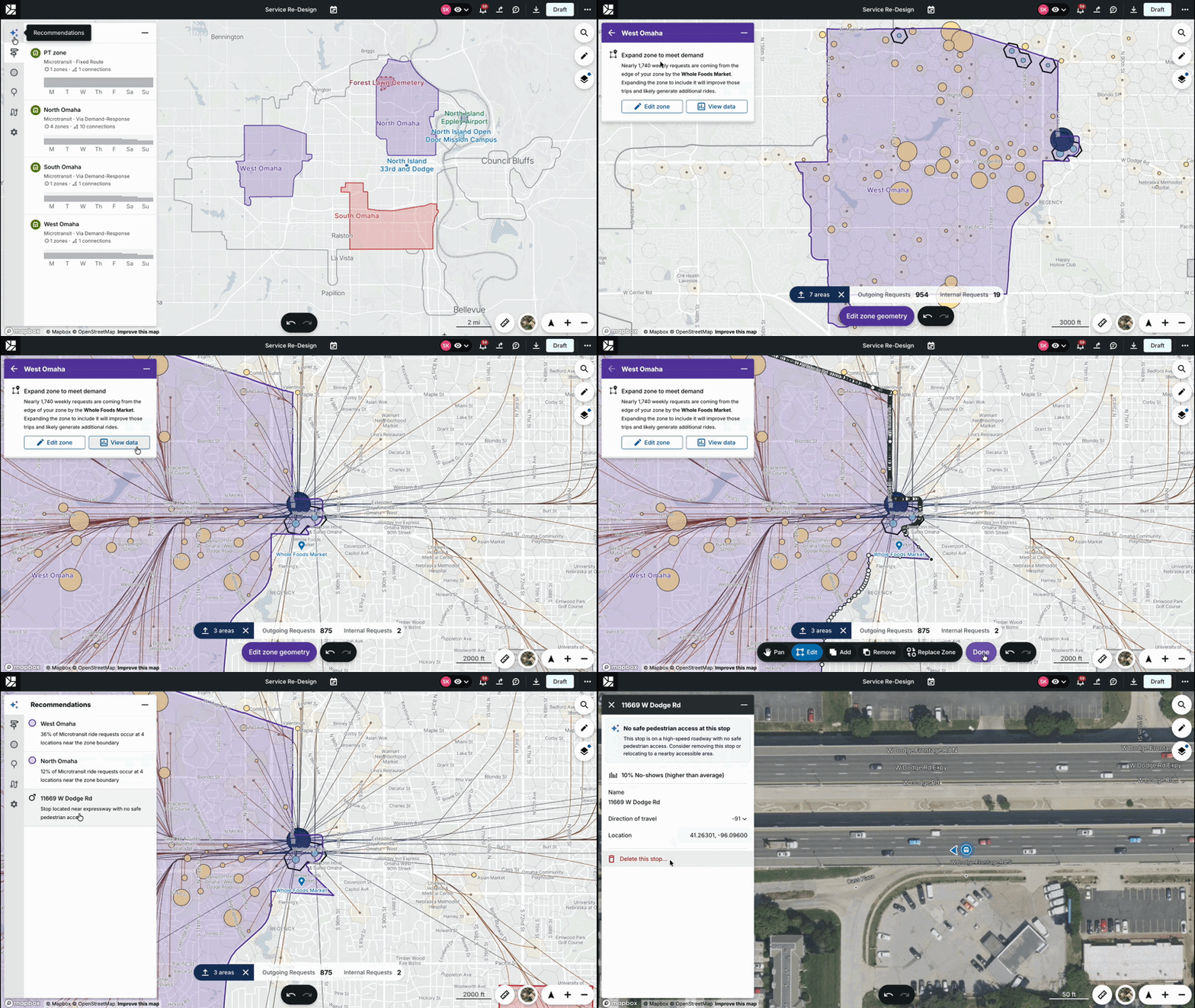
Why this matters.
Via has solved tens of millions of real-world optimization problems over years of deployments across the world. Our models have seen what works, what fails, and what gets overridden by human operators across geographies, modes, and operating environments.
This creates a powerful virtuous cycle: more deployments have led to more solved problems, which has created better models, better outcomes, and stronger systems. Over time, this intelligence has compounded—making it increasingly difficult for narrower point solutions to catch up.
Most importantly, Via Intelligence enables something that has historically been out of reach: transit systems that are both mathematically optimal and behaviorally realistic. Schedules that riders can understand, networks planners can stand behind and change as needed, operations that execute to the highest levels, and systems that balance access, cost, and reliability at scale.
What’s next.
For the first time, cities can plan transit as a truly integrated network rather than a collection of disconnected routes. Via Intelligence lays the groundwork for what comes next: adaptive, multi-modal systems that evolve in real time—across fixed routes, on-demand services, and emerging technologies.
Via Intelligence ensures that as our cities grow, they become more accessible, not more isolated. We've built the brains for our networks, so communities can provide the heart.
We’re the intelligence behind the world’s most connected communities.


