No two days in paratransit dispatch are ever the same. Traffic builds unexpectedly, vehicles go out of service, riders make last-minute changes, and every decision has the potential to impact the rest of the day.
During Via’s recent Dispatcher Workshop, we sat down with three experienced operations leaders—Josh Swann (Easton Coach, Pennsylvania), Douglas Keller (Suffolk Bus, New York), and Amber Falls (HIRTA Public Transit, Iowa)—to discuss how their teams stay ahead of daily operational challenges. All three agencies are juggling challenging geographies—think large service areas, 15+ bridges, one-way roads, military bases—that force them to get creative, and stay proactive.
While every agency operates differently, three themes emerged that apply to nearly every dispatch team.
1. Maintain high on-time performance by staying ahead of disruptions.
%20(1).png?width=1200&height=900&name=live%20map%20(2)%20(1).png)
On-time performance isn't just about reacting when a ride turns red. The most effective dispatch teams anticipate problems before they become service failures.
For Josh Swann, that starts with making sure dispatchers know their service area as well as the drivers do. Understanding recurring traffic patterns, construction, bridge congestion, and special events gives dispatchers the context they need to intervene early.
"We really believe in making sure that our team understands our geography. They understand the time of day that our bridges start to back up, as well as ways to get around those."
His team constantly monitors live conditions, proactively reroutes drivers around congestion, and uses driver tags to keep vehicles on the correct side of major bridge crossings during peak traffic periods.
Amber Falls emphasized that preparation begins well before the day of service. By reviewing schedules weeks in advance, manually assigning trips that require extra attention, and building small buffers into appointment times, her team creates flexibility before operations even begin.
“Our dispatch team is always monitoring Via’s Live Maps and Ride Plan. With the color coding, it's very easy to get a quick bird's-eye view and identify any issues.”
Douglas Keller recommends teaching new dispatchers to focus first on the rides that matter most instead of trying to monitor everything at once.
“We want to make sure we're checking very late pickups and very late drop-offs first.”
Whether it's dashboards, filters, or map views, the goal is the same: surface the biggest risks quickly so dispatchers can spend their attention where it has the greatest impact.
2. Make the most of limited supply.
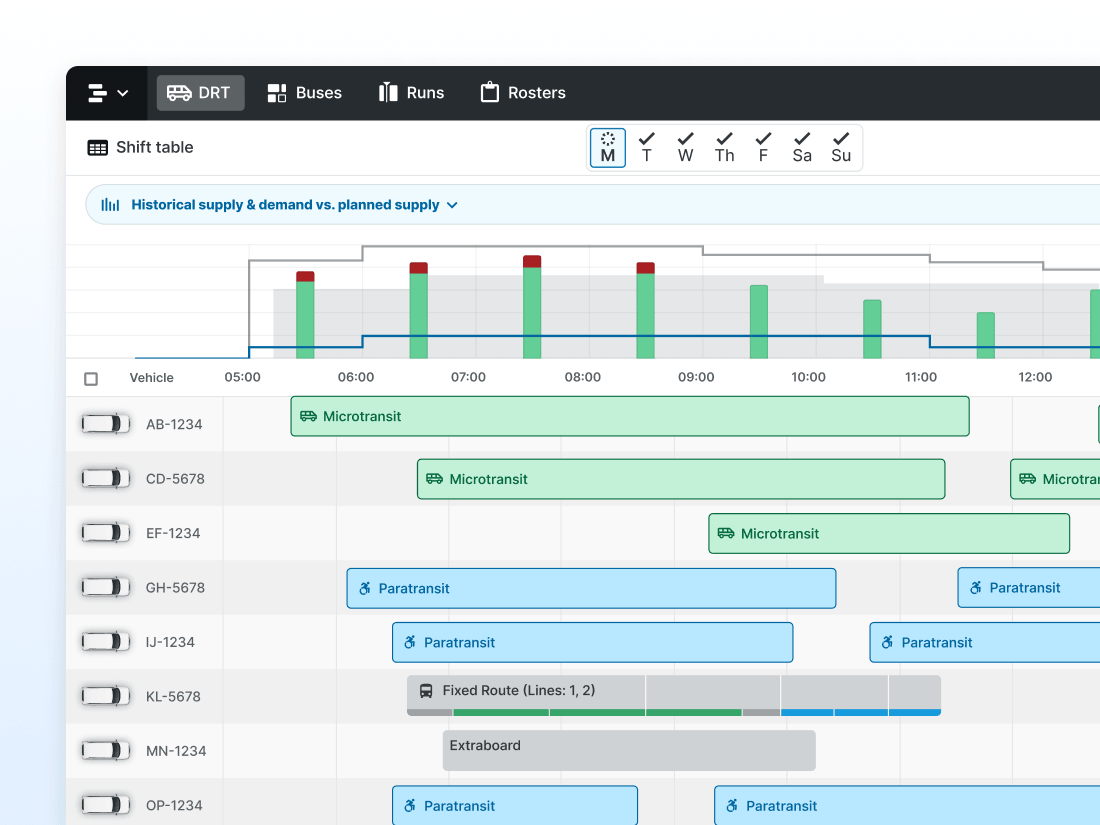
Every dispatcher knows the feeling: demand is climbing, vehicles are full, and there aren't enough resources to cover every request.
The panelists agreed that managing limited supply starts long before the first ride of the day.
HIRTA uses reporting to identify recurring capacity constraints, understand where demand is increasing, and adjust schedules proactively instead of waiting for problems to appear.
“We're consistently looking at ride request data... It helps us identify days or times where demand is really high... and where we need to make some changes with service level or routing.”
For agencies working with multiple providers, Josh Swann stressed the importance of communication and clear operating strategies.
“My biggest suggestion is to make sure that your team is pushing all of that supply to themselves first... but still finding that balance... and just open communication.”
Looking back at historical performance before major holidays or seasonal events helps his team anticipate where additional resources will be needed before service begins.
Douglas Keller also highlighted the importance of intelligent scheduling. Rather than simply optimizing for efficiency, his team worked to ensure difficult trips always have a place and workloads remain balanced across drivers.
“We really stressed that we want the big, complicated stuff to always have a home... It's much easier for me to find something that's same town to same town.”
Balanced work doesn't just improve efficiency—it reduces dispatcher intervention throughout the day and creates a more reliable experience for riders and operators alike.
3. Never lose the human touch.
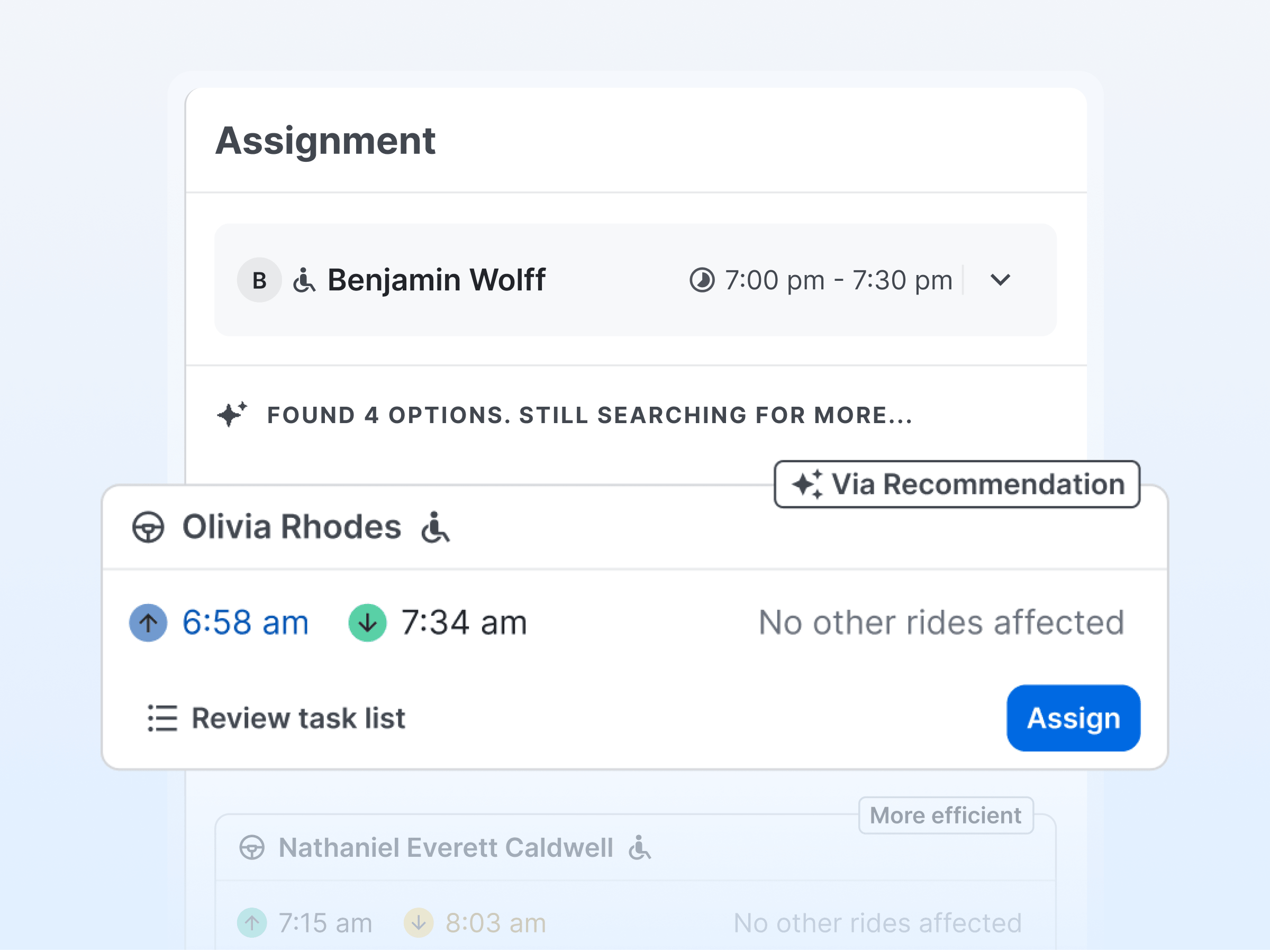
Technology helps automate a lot of manual work, but the panel agreed that people remain at the center of great service.
Some riders can comfortably use self-service tools. Others need someone to understand their unique circumstances, explain scheduling options, or help them navigate unexpected changes.
Amber described how her team communicates proactively whenever service constraints arise, helping riders choose travel times that better match available capacity instead of simply declining requests.
“We spend a lot of time working to ensure that the community is informed of any service constraints... so we can help direct riders to days or times that will best meet those service needs.”
Josh also spoke about the importance of working with a partner that builds technology around dispatcher workflows rather than expecting dispatchers to work around the software.
“One of the things that I asked for was, ‘Can we create a situation where we can search by address and see riders inside of this window that we need to anticipate? Now we can!’”
Douglas reinforced that technology is most valuable when it helps dispatchers make better decisions faster—not when it overwhelms them with information.
“It helps them focus, drill down a little more, instead of swimming through 220-some-odd routes.”
At its best, technology removes busywork so dispatchers can spend more time solving problems, supporting drivers, and helping riders.
Great dispatch is proactive.
Across three very different agencies, one message came through clearly: successful dispatch isn't about constantly reacting. It's about preparing early, prioritizing what matters most, and giving dispatchers the tools and information they need to make confident decisions.
Whether you're monitoring on-time performance, stretching limited vehicle supply, or helping a rider through an unexpected disruption, the fundamentals remain the same: stay ahead of problems, use data to guide decisions, and never underestimate the value of experienced dispatchers making informed human judgments.
Want to learn more about the tools that help your Dispatch team stay ahead of the day? Talk to our team.


