
Customer: City of Kenora, Ontario
Population: Approximately 15,000
Solution: Turnkey microtransit
Results at a glance: Tripled ridership in first year, maintaining 100% service uptime and a 4.9 star rider rating.
Prefer to listen? Tune into the full episode on Inside City Hall
The challenge
For years, Kenora’s public transit system consisted of a single bus operating the same circular route for 12 hours a day. Despite investments in bus shelters, route surveys, and community engagement, ridership continued to decline.
With a small urban core, and extensive low-density surroundings, the city faced a difficult challenge: how could it make transit more accessible and sustainable for its community?
In 2020, amidst the pandemic, the situation became urgent. One bus failed its safety inspection, another was struck by a train, and driver shortages and parts availability made replacing the fleet increasingly difficult.
Rather than invest significantly in a used bus, Kenora chose to rethink its approach entirely.
The solution
Kenora partnered with Via to transition from its traditional fixed route to a turnkey microtransit service, launching the full service in just a few months.
With limited in-house transit expertise and an urgent need to maintain service, the city needed a solution that could be implemented quickly without requiring it to build an operations team from scratch.
As Heather Pihulak, Kenora’s Deputy CAO and City Clerk, explained:
“This model works extremely well for communities that don't have the expertise on staff.”
Via manages the day-to-day operation of the service, including driver recruitment, screening, training, scheduling, and service optimization, allowing city staff to focus on oversight and future planning.
Ahead of launch, Kenora invested in community engagement, connecting with residents at farmers markets, open houses, and senior centers. Staff helped residents understand the new service and get comfortable with app-based booking, supporting a smoother transition.

The results
Before The Wave, Kenora’s transit system ran inefficient one-way fixed route loops, and frequent service disruptions and driver shortages made it hard for residents to rely on.
Today, The Wave delivers about 4,300 rides a month, more than triple that of the old system.
- Ridership tripled in under a year, with a high share of pooled rides and strong on-time performance. New residents moving to the area are counting on The Wave to get to their jobs.
- 100% service uptime. After years of breakdowns and driver shortages, the service now runs every day it’s scheduled to.
- A 4.9 average ride rating. Riders consistently rate their trips among the highest possible scores.
- A larger service area. The on-demand zone reaches well beyond the former routes, so riders can get to destinations the fixed route never served. That includes high school co-op students reaching their placements, healthcare workers getting to vital jobs, and seniors having the ability to move around our community.
- Operational efficiency for the city. Via handles vehicles, operations, marketing, and rider communications, so city staff can focus on oversight and planning.
Pihulak has been impressed by the service's growth and ongoing optimization:
“I sleep pretty well at night when it comes to transit. They [Via] do an incredible job, in the background.”
Making a difference in the community
For Kenora, the impact goes beyond ridership numbers. The WAVE has become an important connection for seniors, healthcare workers, newcomers to Canada, and students.
One high school co-op teacher shared with Pihulak that the service had opened up placement opportunities for students who previously couldn't reach them using the old bus route.
Another story has stayed with her: a senior who lost her driver's license and worried that she would no longer be able to attend her social activities, including choir and card games.
As Pihulak recalled:
“The Wave has changed everything for her, and she's able to move around our community just like she had a car.”
For the city, these are the outcomes that matter most: helping residents maintain their independence, reach employment and educational opportunities, and stay connected to their community.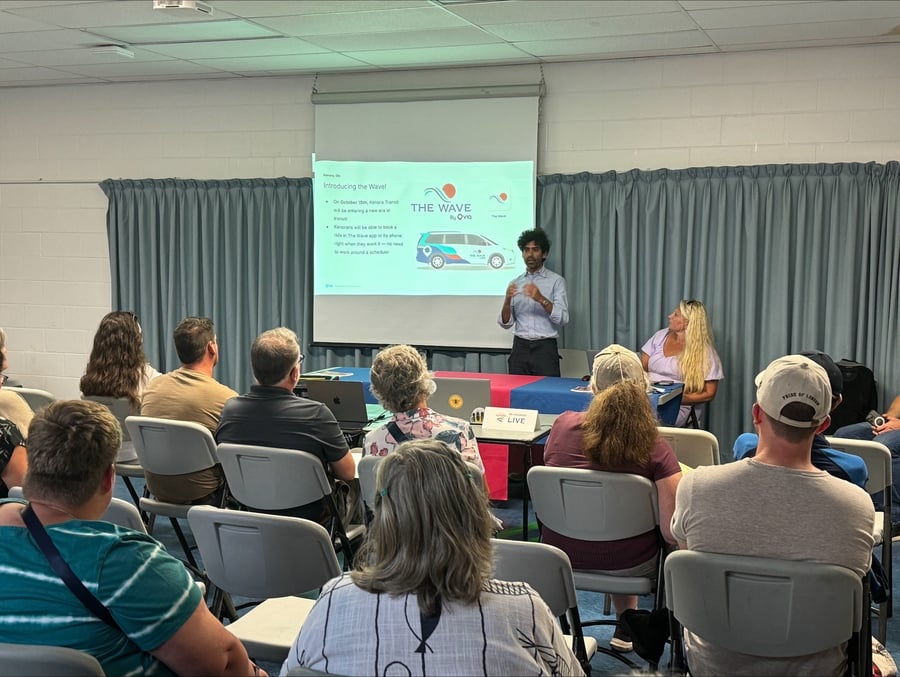
Looking ahead
With ridership continuing to grow, Kenora is exploring ways to expand service hours, introduce weekend service, and integrate Handi Transit, its existing specialized transit service, into the microtransit model. The city has applied for provincial funding to support these plans and is awaiting the outcome.
For other municipalities facing declining fixed route ridership, Pihulak believes the experience is worth considering, particularly for communities without dedicated transit expertise.
Inside City Hall continues with more conversations featuring the leaders behind high-performing public transit.