
Executive Summary
For decades, Sioux Area Metro (SAM) provided basic transit services with a fixed route and paratransit network focused on the core of the city and weekend-only microtransit for last-mile connections. However, as Sioux Falls expanded and post-COVID ridership failed to recover, Mayor Paul TenHaken faced a critical decision: innovate or continue with a system that couldn’t scale up to meet the needs of a growing community. In 2024, Sioux Falls invited several possible partners to re-imagine the Sioux Falls transit system. The city selected Via to design and implement a data-driven operating system that reimagines public transit as a dynamic, evolving part of the community.
This partnership has led to high-frequency buses and citywide microtransit, expanding transit to 100% of Sioux Falls. The results? A 25% reduction in cost-per-ride, a 37% increase in fixed route ridership, and nearly double the job access for all residents within one hour – all on a neutral budget.
This is the story of how Sioux Falls took a bold step to transform its mobility.
The challenge: Pursue transit innovation, without service disruption or budget increase.
Sioux Falls is a community of 225,000 people, and it is growing fast.
Public transit is deeply personal. As Mayor Paul TenHaken states,"Transit is extremely emotional. A fraction of the community uses it, but 100% of your residents have an opinion on it". As a result, changing a transit network or vendor may be viewed as risky for many cities.
For the mayor of Sioux Falls, what felt more risky was sticking with the same approach the city had relied on for decades, and watching the transit system reach its fiscal cliff amidst rising complaints of residents regarding empty buses.
With that in mind, the City set out to tap into the innovation they were already witnessing around the country in places like Arlington, Texas, Summit County , Utah, and beyond. Apart from inviting innovation and fresh thinking to their doorstep, the City defined clear objectives – offering detail on their tactical requirements, all the way to their strategic long term vision.
During the transition, there must be:
- A hands on change management process that involves the community
- Zero disruption to riders initially, while communal buy-in is developed for longer term system change
- A proven ability to handle labor relations with unionized employees to retain the cities valuable talent and minimize disruption from transition
Tactical requirements:

The ability to combine fixed routes and on-demand modes to generate operating efficiencies

Unified technology integrating the rider and driver experience while providing clear, real-time reporting on key metrics

Consultative support to increase bus frequency, speed up routes, and expand coverage - within the current budget.
Long term vision:
- A data driven transit system that keeps up with housing and job growth through proactive solutions
- Strong alignment with long-term planning and economic development goals
- A focus on growing ridership while delivering a high quality of service
💡 The lesson: Creating a competitive procurement environment was key to Sioux Falls success. Inviting new players to the table, demanding transparency and proactivity of their partner, and being specific about both their short-term needs and long term vision was essential
Implementing a data-driven, multi-modal transit network with Via.
After the procurement cycle ends and the bid is awarded – the hard work begins.
For Sioux Falls, choosing a partner with experience in union management, proven ability to retain existing talent (drivers, dispatchers, and more) - while delivering a deep level of community engagement, press, and marketing to bring constituents “along for the ride” was key.
Step 1: Move fast, be present.
The day after the bid was awarded to the Via team, a general manager was on the ground at Sioux Falls together with Via’s COO to begin working with the unionized staff and discussing what life at Via would look like.
New telematics were quickly implemented in vehicles to improve safety, incentives programs were introduced, and schedules were optimized on existing routes offering operators better work hours. New training paths were made available to employees, helping them continue to upskill within the city they know and love.
Key workforce wins:
- Retention of 100% of Sioux Falls existing, unionized operator staff
- Reduction of employee health insurance premiums by 30%
- Within the first few months of transition, Sioux Area Metro (SAM) achieved 100% staffing levels for the first time in over a year

“Transitions are tough. But with Via, we seemed to walk right through it.”
Step 2: Re-design and implement, while keeping risk low.
A phased launch strategy was deployed in order to mitigate any risk of disruption to service. During the first 3 months of launch, Via committed to operating the city’s network ‘as-is’ with the exception of launching city-wide microtransit.
This decision allowed the city and the Via team to quickly increase interest in transit among residents, while simultaneously revealing emerging patterns in travel that would later contribute to the network redesign.
During those months, Via Strategies team worked together with the city to redesign Sioux Falls transit – focusing on the city's core goals of faster routes, with 100% coverage, and integrated mixed-modal route planning for riders (including riders who require ADA compliant service). In parallel, Via’s community engagement team focused its efforts on helping the city gain support from the council and members of the community through in-person workshops and discussion.
| Before | After |
|
(Source: Via Remix, Sioux Falls Map) Sioux Falls transit network coverage powered by slower, “loopy” fixed route buses and weekend only micro-transit |
(Source: Via Remix, Planning tool) Sioux Falls’ integrated network, combining streamlined fixed routes with microtransit and paratransit service, powered by Via. |
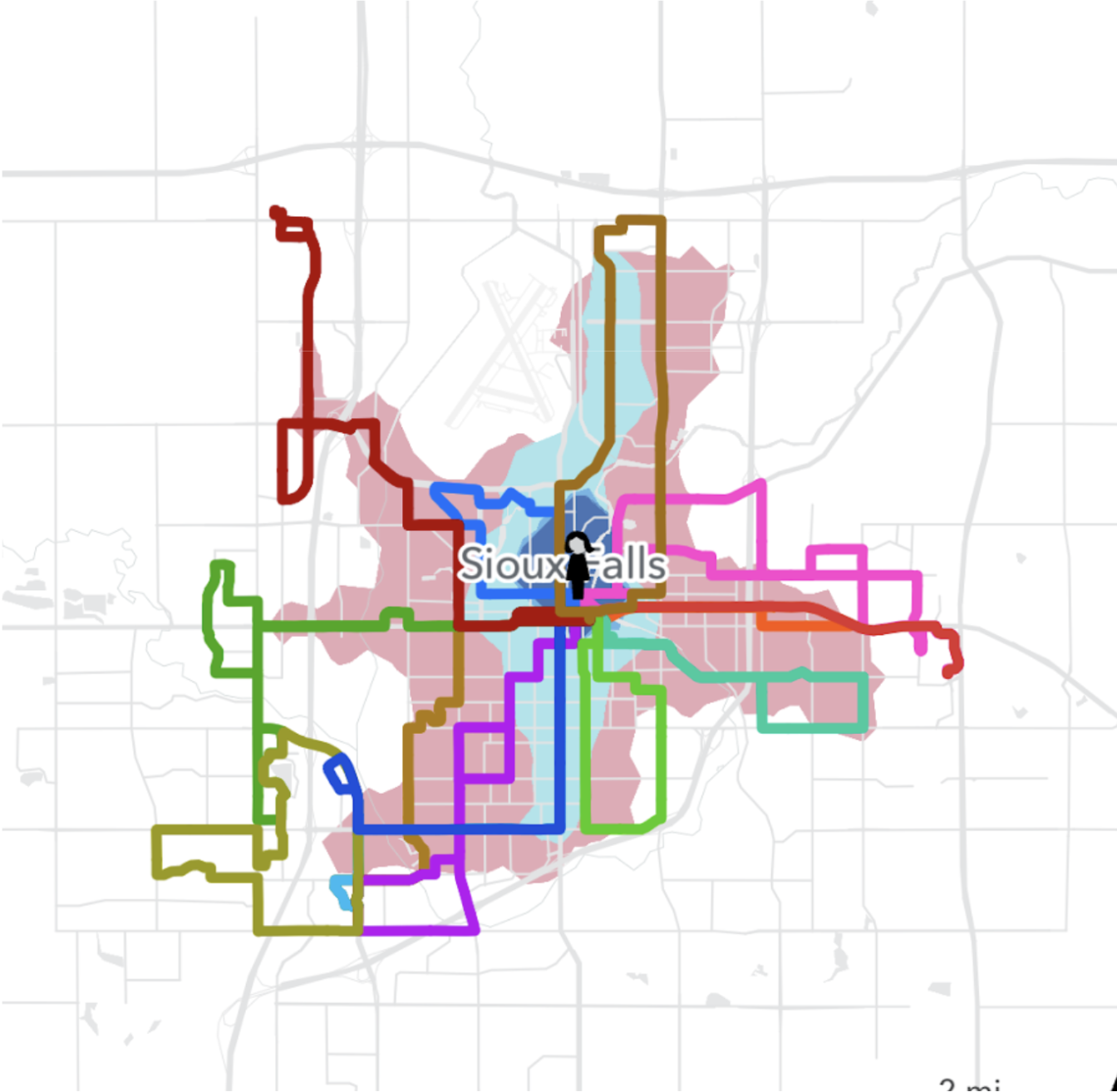
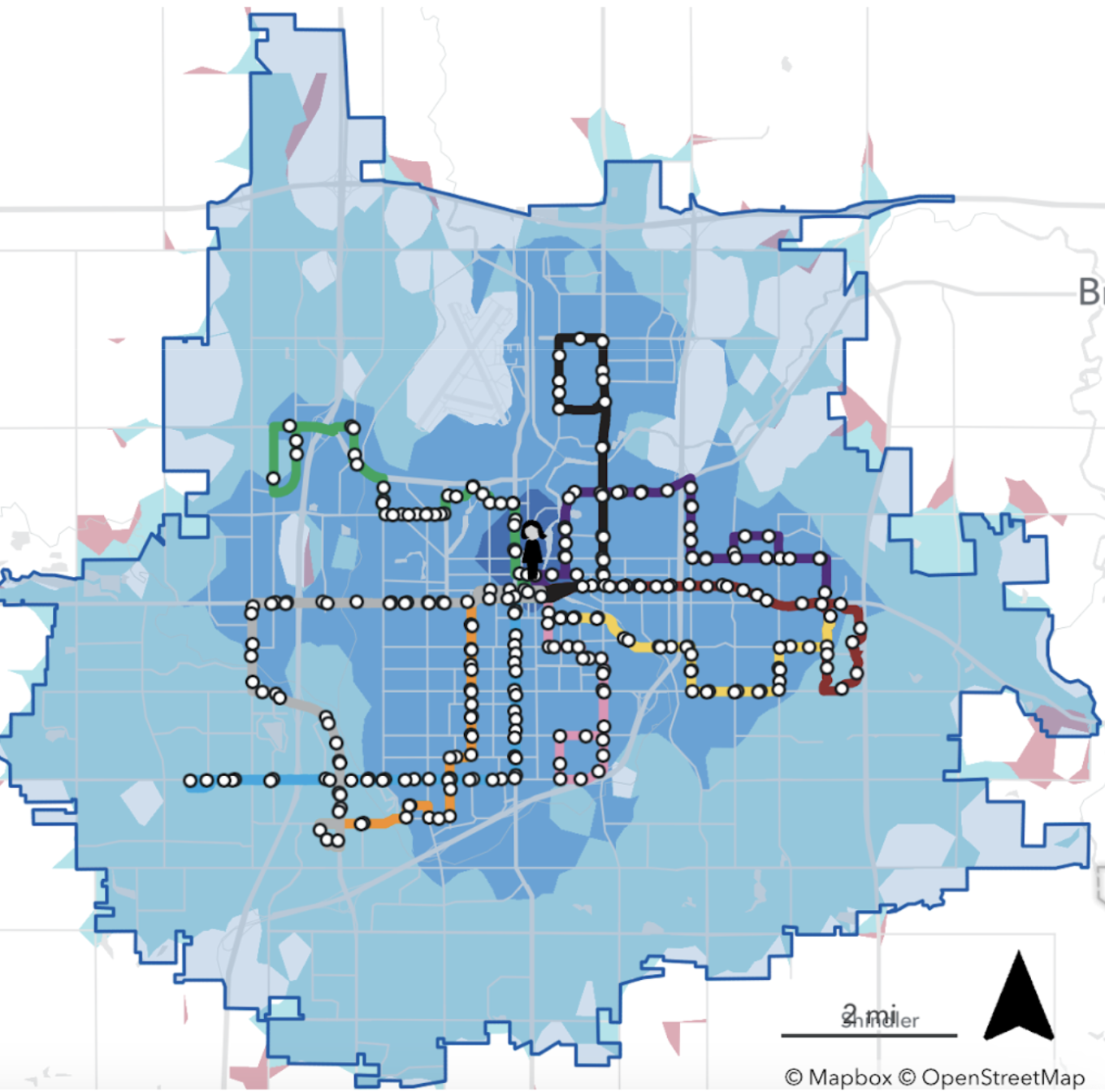
Key design wins:
- From zero fixed routes with 30 minute headways, to five
- 100% citywide coverage enables every resident of Sioux Falls to access all parts of the city
- Creating access to over 50,000 more jobs using public transit (compared to the previous system) in under 60 minutes - a major economic win for the city
See how Service Design comes to life in Remix
Step 3: Build community support (and Make it "Cool").
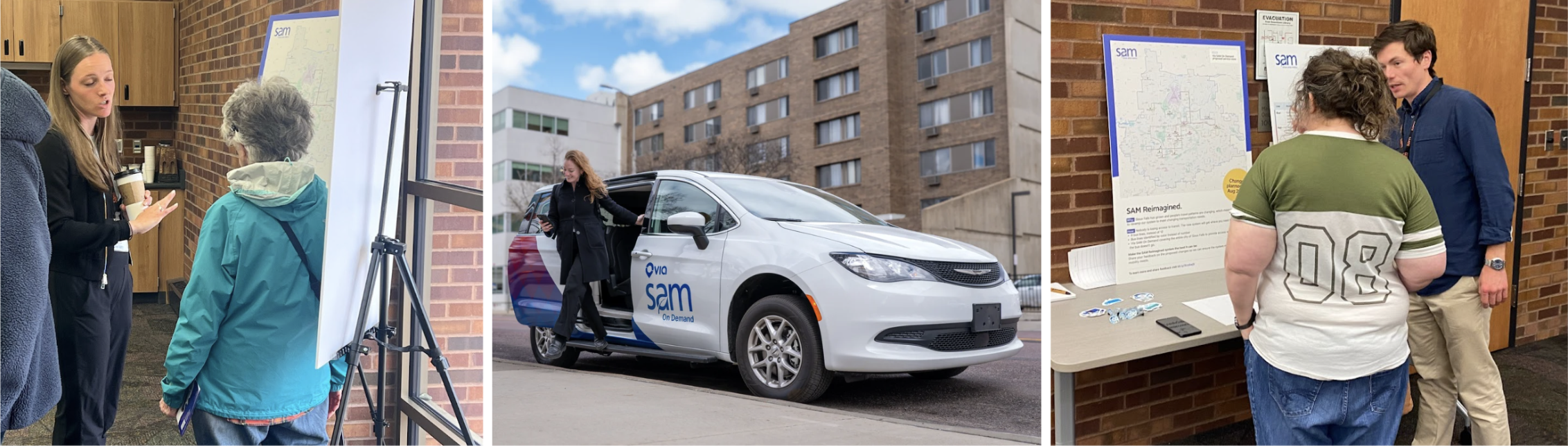
Community engagement and support of the public transit redesign is essential when performing large scale change. Together, the city and Via held "sticky note" sessions, inviting residents to whiteboard their dream transit system. They asked: If you could start over, what would you do?

“We wanted to make sure the people knew this wasn't some bureaucrats in a back room deciding where we're gonna go.”
Once the plan was set, the Mayor became the system's biggest champion. Press conferences were held, photo ops were taken featuring the new microtransit vans, and the narrative began to shift – Sioux Falls was truly “making transit cool again."
Key community wins:
- The city continues to see ~28% increase in ridership growth YoY, despite its 2.5% annual growth rate. These numbers suggest that Sioux Falls is continuously increasing their repeat rider base.
- In 2025, Via helped the city win a grant to continue to improve the look and feel of its transit system. The “Better Bus” program will roll out in 2026 and focuses on adding new and replacing aging shelters that South Dakotans can rely on during fluctuating temperatures, ensuring all of our stops are accessible and provide the best rider experience possible.
Step 4: Continuous improvement.
To deliver on the promise of proactive and continuous improvement, Via leverages data from its integrated platform to show the city in real-time how transit is operating across modalities (microtransit, paratransit, and fixed route) as well as service areas. Route optimizations are a part of routine service in Sioux Falls, and citywide change days are in effect 2x annually to help riders adjust to larger shifts.
Key optimization wins:
- Early in the transition to Via, demand insights from the platform led to four fixed routes starting earlier to better serve morning commuters.
- Fixed route ridership is up 37%, with total ridership up 28%, while cost per ride has reduced by 25%
- Rider satisfaction may be one of the best indicators of continuous improvements at SAM, the Sioux Area Metro app currently has a 4.8 star rating on the apple store
The takeaway for city and community leaders.
Inertia is a common battle – Change may feel risky, cumbersome, and even opaque.
However, innovations in transit and transit technology are here. And for the cities adopting them, this is translating to direct economic impact in their communities, and tangible value for their residents.
Let Mayor TenHaken’s administration also be a lesson: By selecting a partner capable of working with the existing union workforce, within the existing budget, and utilizing current assets, Sioux Falls elevated the entire network, creating a transit system that will sustain their growth for years to come.
“Don't be afraid to experiment... It's easy for us in government to get stuck. We're risk-averse, we don't want to look stupid... but [the taxpayers] also entrust us with that money to be smart with it.”
About Via
Via partners with cities, counties, and transit agencies worldwide to plan, power, and operate smarter, more flexible public transportation services — strategically integrating microtransit, paratransit, and fixed-route onto a single platform.
We support network service design and ongoing optimization, working alongside local teams to right-size and continuously improve outcomes for their community.


