Via’s technology powers more than 5 million paratransit trips annually — and our customers are seeing transformative results:
- NJ Transit, New Jersey reduced cost-per-trip by 60% while improving rider experience
-
Trinity Metro reduced rider call volume by 20% and saved 1,100+ staff hours
-
Suffolk Bus Corp cut complaints by 50%.
-
Intercity achieved an on-time performance of 99%
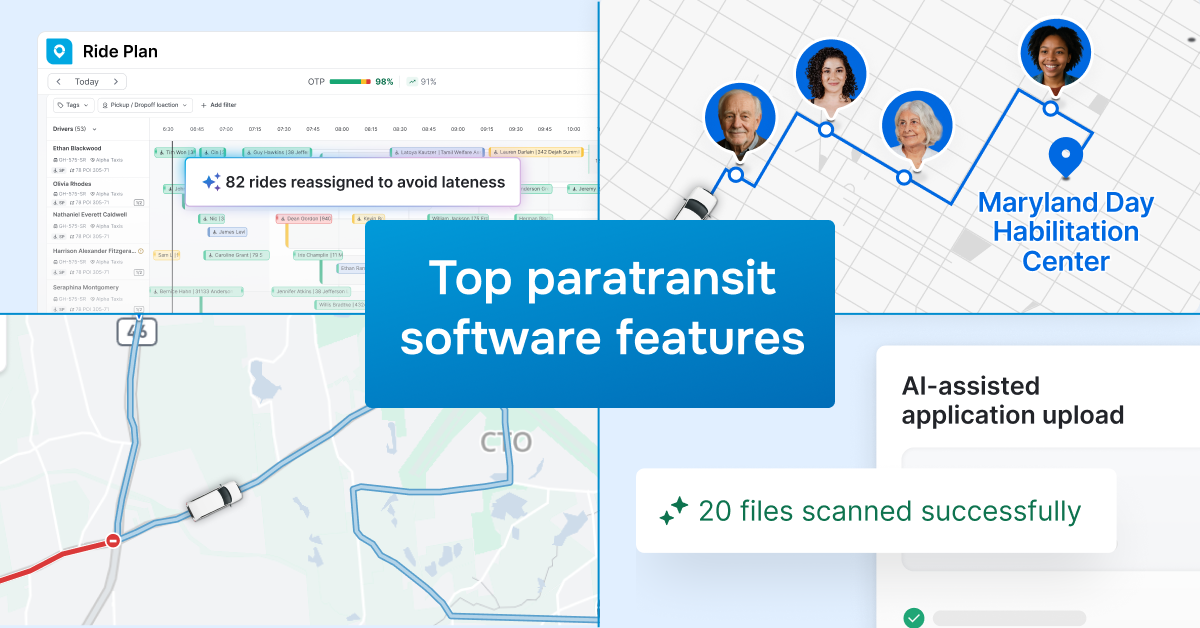
How did they do it? Below, you’ll find 5 essential features that our partners’ have highlighted as being instrumental in helping them to achieve these goals.
1. Custom mapping and proprietary speeds data.
More accurate routing data is the key to keeping your on-time performance sky high.
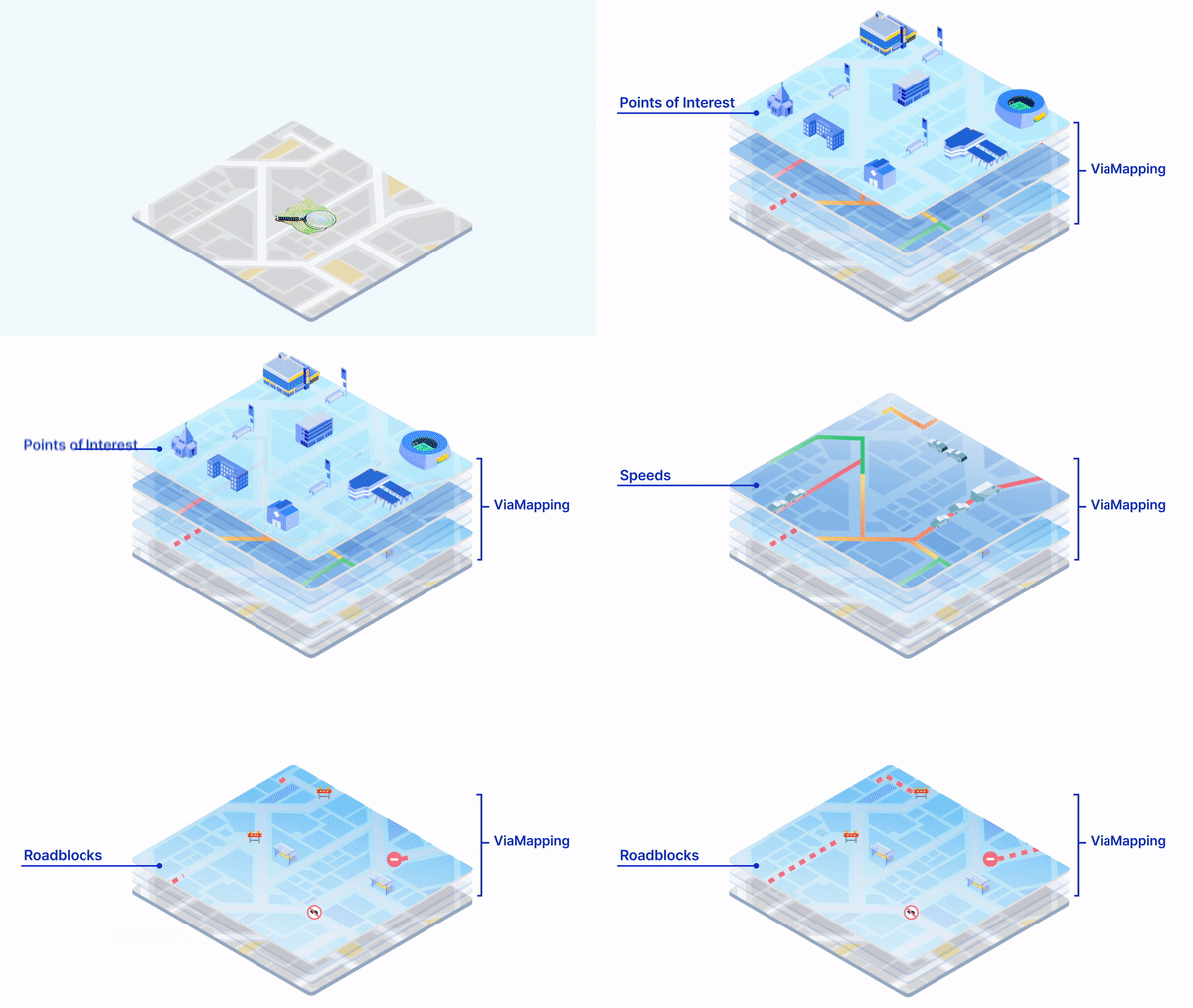
Some software providers base their maps only on a source like Google Maps or Open Street Maps (OSM). That works great for everyday drivers, but it’s just not enough for paratransit operations. Just because a road is on the map doesn’t mean a cutaway van should be routed down it. Maybe two-way traffic is prohibited in Google Maps, but it’s permitted for transit vehicles. Maybe you prefer to avoid side streets because snow piles up on them in the winter.
The most effective paratransit maps are actually custom: taking a typical transit map and then augmenting it with a proprietary layer that reflects your preferences and geography and gets smarter over time, as it learns about how your drivers really move on your streets.
Then, to keep rides on time, we couple our custom maps with a speed model based on 3-factors; real time speeds from Google maps, real-time speeds from your actual vehicles, and a predictive model that looks at your historic data to predict the likelihood of how on time each vehicle is likely to be. This data trifecta is the secret sauce to allowing optimization algorithms to proactively identify and look for a better option when a vehicle has a high likelihood of running late, before it happens. The real magic behind an outstanding OTP.
❓What to ask your vendor:
- What mapping sources does your software use?
- Is a custom mapping layer included in the base cost or is there an extra fee?
- To what extent can the map be adjusted based on your specific paratransit operational needs?
- What speeds data does your algorithm utilize and is it included in your costs or is there a separate fee?
2. Seamless route & and bid creation with a supply planning studio.
No two days in any paratransit service are the same, whether you’re facing planned changes like a holiday schedule or unplanned shake-ups like driver call-outs.
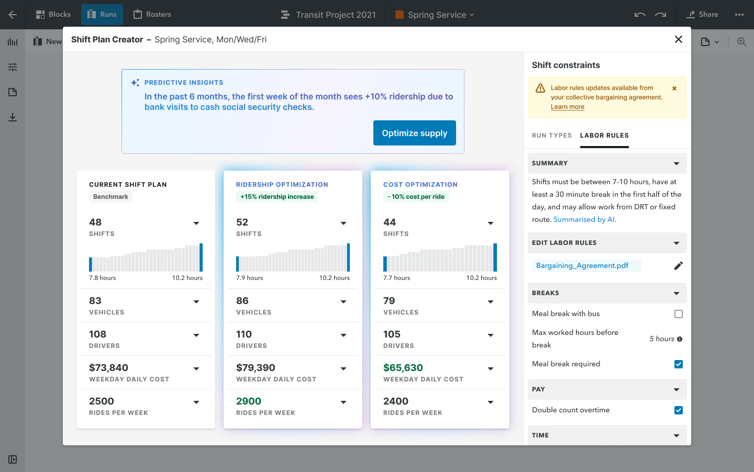
“Smart” supply planning tools make it seamless for agencies to create and modify shift schedules and bids that maximize resources and respect labor rules. With a click of a button, you can ingest your labor rules and, leveraging proprietary AI-models to predict demand and anticipate call-outs, the system will generate multiple shift block scenarios, clearly indicating the cost, efficiency, and driver experience trade-offs across each option.
Once you pick the right option for your agency, the system lets you set it and forget it. Create recurring shifts as far as you need into the future. Tools like holiday scheduling allow you to plan and adjust for schedule shifts well in advance. The icing on the cake - integrated tools for driver bidding make it seamless to connect drivers to shifts, honoring seniority guidelines and other key labor inputs.
❓What to ask your vendor:
- How does your system handle recurring shifts and holiday service planning?
- Can we simulate and optimize supply against expected demand and anticipated call-outs in advance?
- How are runs built, bid, and adjusted without manual rework?
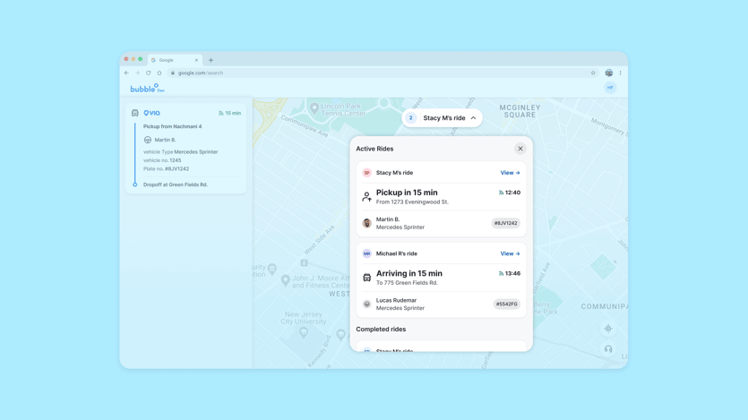
The center management tool, which enables caregivers to follow live ride progress for one or multiple riders, so they always know when to expect a driver and when someone has arrived safely.
3. Center & caregiver solutions.
Care centers are an essential resource for the community — and getting riders safely to and from these facilities requires a high degree of care.
Tools like trip grouping allow you to set a group of riders together and lock that trip, ensuring that the algorithms will always ensure those riders are paired together. Center management features allow you to set important facility details such as opening hours, driveway vehicle limit restrictions, and specific door access information to ensure that riders are never arriving before staff are ready for them.
Dedicated caregiver and center management apps allow individual and institutional caregivers to track and manage rides on behalf of their clients, getting instant status updates and significantly reducing calls to the agency.
❓What to ask your vendor:
- Do you have tools to group riders and lock them together and/or with a specific driver?
- Do you have the ability to set up unique configurations with key details for a care center?
- Do you have a dedicated app for caregivers to manage and track rides?
- How do you create secure "connectivity" between a rider and their trusted caregivers within your system?
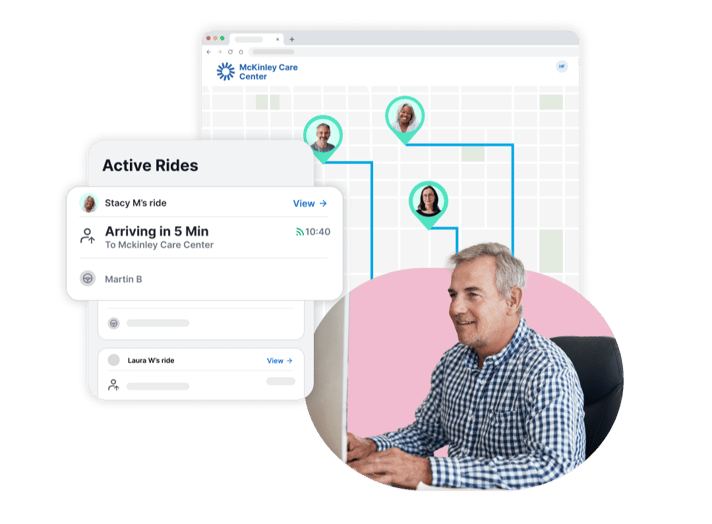
York Alzheimer’s Society runs nearly 40 day program centers across Ontario, serving clients with moderate to severe dementia. Many riders experienced heightened anxiety in the afternoons and would repeatedly ask staff for updates, often feeling nervous about when their ride would arrive. Staff at each center called dispatch 6–12 times a day for trip statuses. Now with their own dedicated Care Center App, the centers can view live trip tracking for their client’s trips, reducing “where’s my ride” calls from staff by 80% while improving safety, clarity, and calm for the community.
4. Doing more with less: AI-Agents.
Paratransit teams spend an enormous amount of time on repetitive, low-value tasks: checking ride status, manually transcribing eligibility applications, and managing suspensions. These tasks slow response times and burn out staff without improving service quality.
AI agents handle these workflows instantly. Riders get immediate answers without waiting on hold. Applications are scanned, transcribed, and routed automatically. Suspensions and reinstatements are processed consistently. The result is faster service, fewer errors, and more time for staff to focus on the areas that require their real expertise.
❓What to ask your vendor:
- What IVR or AI-powered strategies do you offer to help us reduce call wait times and improve self-service options for simple trip inquiries?
- What rider calls or requests can AI-IVR handle end-to-end today?
- Can AI tools scan and ingest eligibility applications automatically?
- How do you ensure AI escalates sensitive or complex cases to human staff?
5. Human in the loop: Real controls for real agents.
Automation is essential, but paratransit is personal. Dispatchers need the ability to intervene when riders are change-averse, medically sensitive, or facing urgent situations.
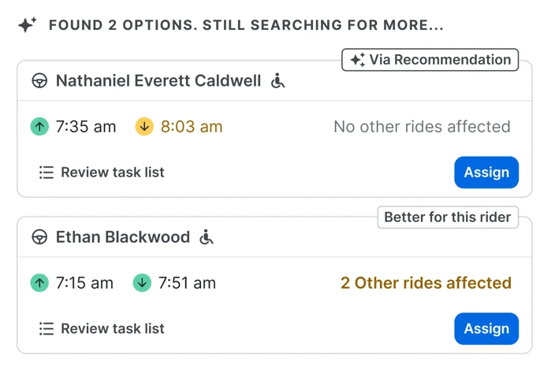
Modern systems combine automation with guardrails. Dispatchers can manually assign trips, lock rides to specific vehicles or times, and manage waitlists transparently. Where AI plays a role is in giving dispatchers clear and quick transparency into how those decisions ripple through the rest of the schedule.
❓What to ask your vendor:
- What elements of a trip can dispatchers manually lock or override?
- When staff intervene, how does the system show downstream impacts?
- Can waitlisted trips be prioritized and released dynamically without rebuilding routes?
That’s the list! By prioritizing these five features, you can ensure your next paratransit software investment increases efficiency and elevates the rider experience. A final word of advice: Check with your vendor whether these features are included in your baseline package price or require additional charges.
Want to learn more about any of the features described above or see them in action? Get in touch with us.