No Fixed Route? No Problem: The Future of City Transit With Jason Via

Planning & network optimization
Model scenarios, measure equity, and see how rider journeys change—before you commit service to the street.
Design more accessible networks.
Quantify impacts on priority communities
Use AI and machine learning to predict how planned changes affect access where outcomes matter most.
Title VI and access, without delay
Run Title VI and transit access workflows in minutes, not weeks, while keeping analysis tied to the scenarios you’re testing.
Fixed-route and on-demand, planned together
Design integrated networks in one platform so modes, transfers, and coverage tradeoffs stay connected.
Better transfers, better trips
Optimize timed connections at key stops to reduce waits and missed transfers across the journey.
Spatial analysis that supports hard decisions
Layer travel-cost burden, walksheds, and other spatial views so tradeoffs are visible beyond the map sketch.
Seattle’s King County Metro used Remix Ridership Modeling to redesign over 20 bus routes. By predicting rider behavior across multiple scenarios, they implemented a plan that cut wait times by ~10% and boosted ridership by ~15%.
Build consensus. Fast.
Collaborate in the same plan everyone sees
Work together in real time with comments tied to what changed—so feedback stays actionable.
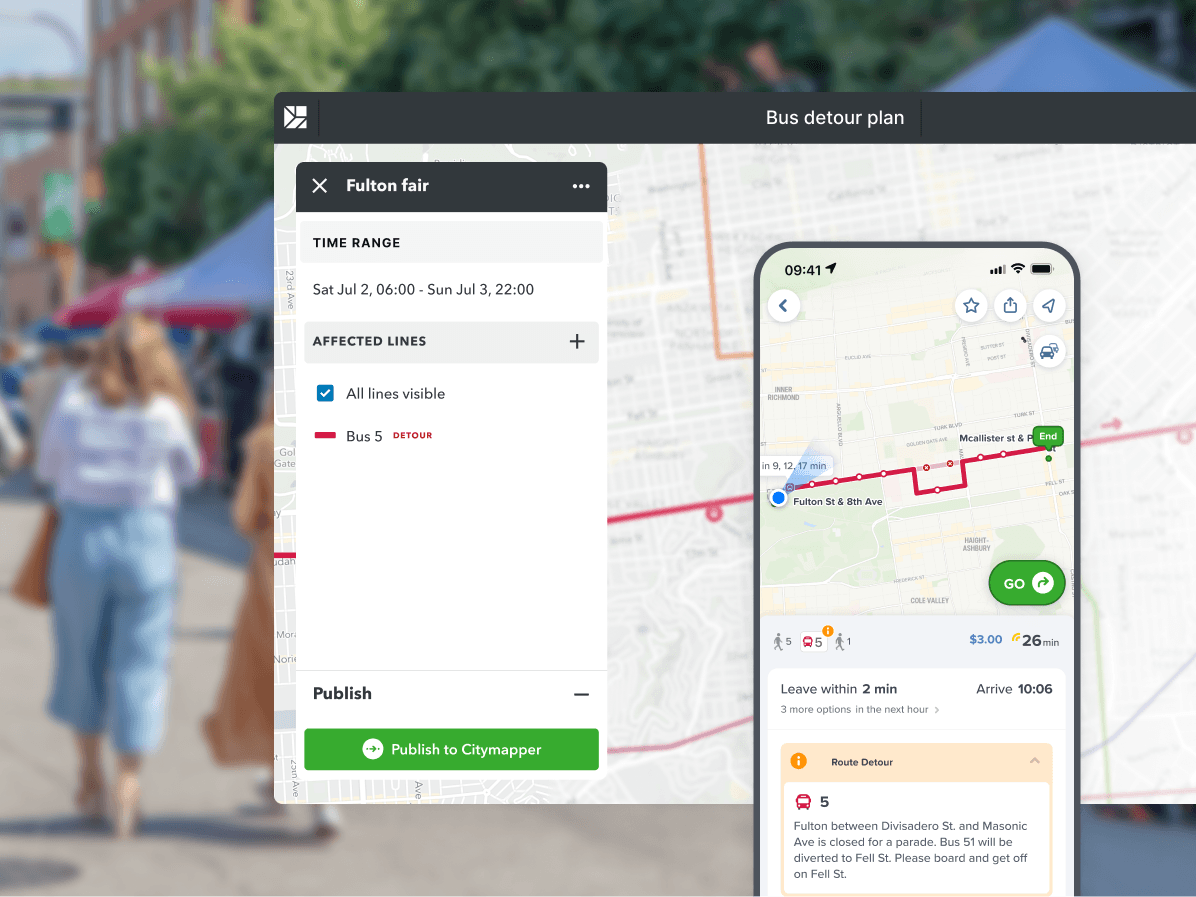
Track, plan, and communicate disruptions
Easy-to-use map-based tools to publish disruptions, automatically update riders’ routes, and create public-facing detour maps for websites and social media.
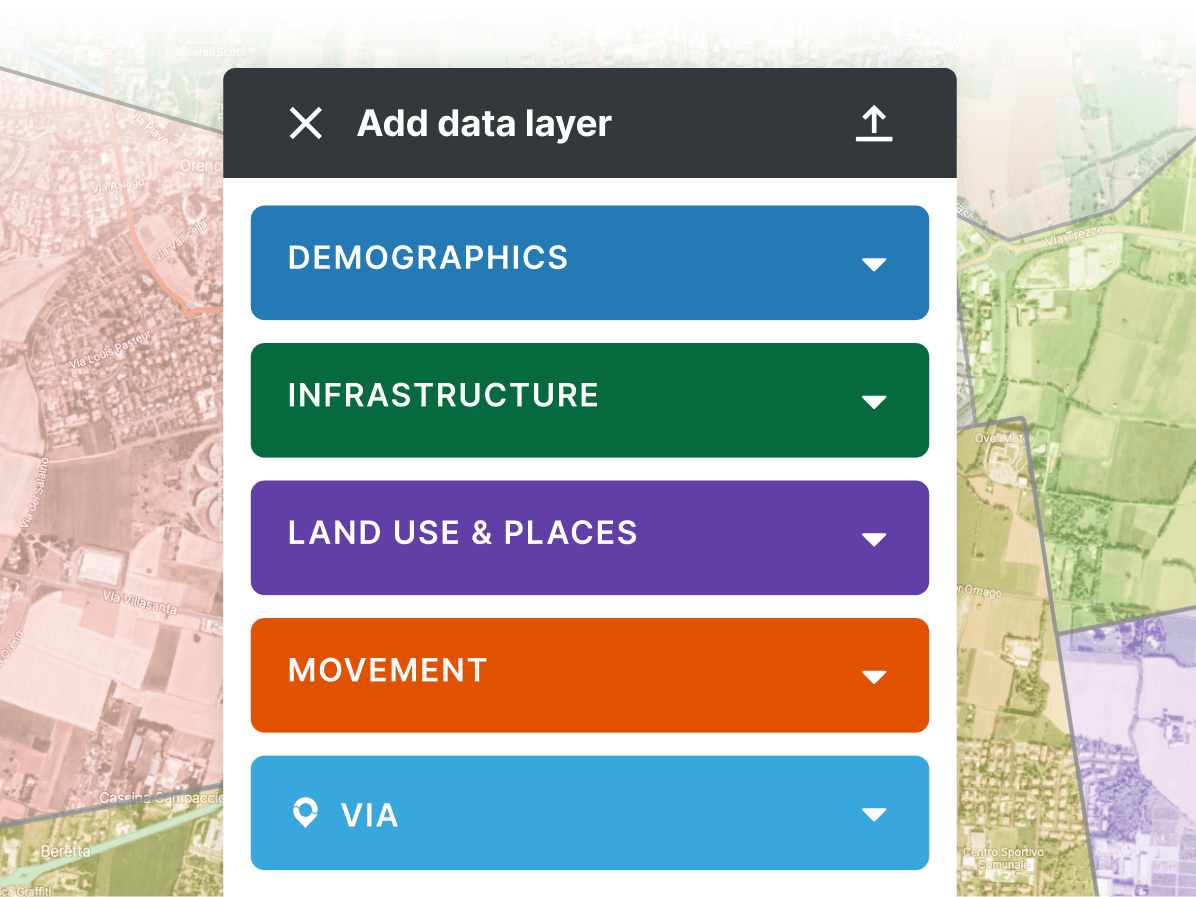
Planning context, built in
Choose from hundreds of data layers so you spend less time assembling base maps and more time improving service.
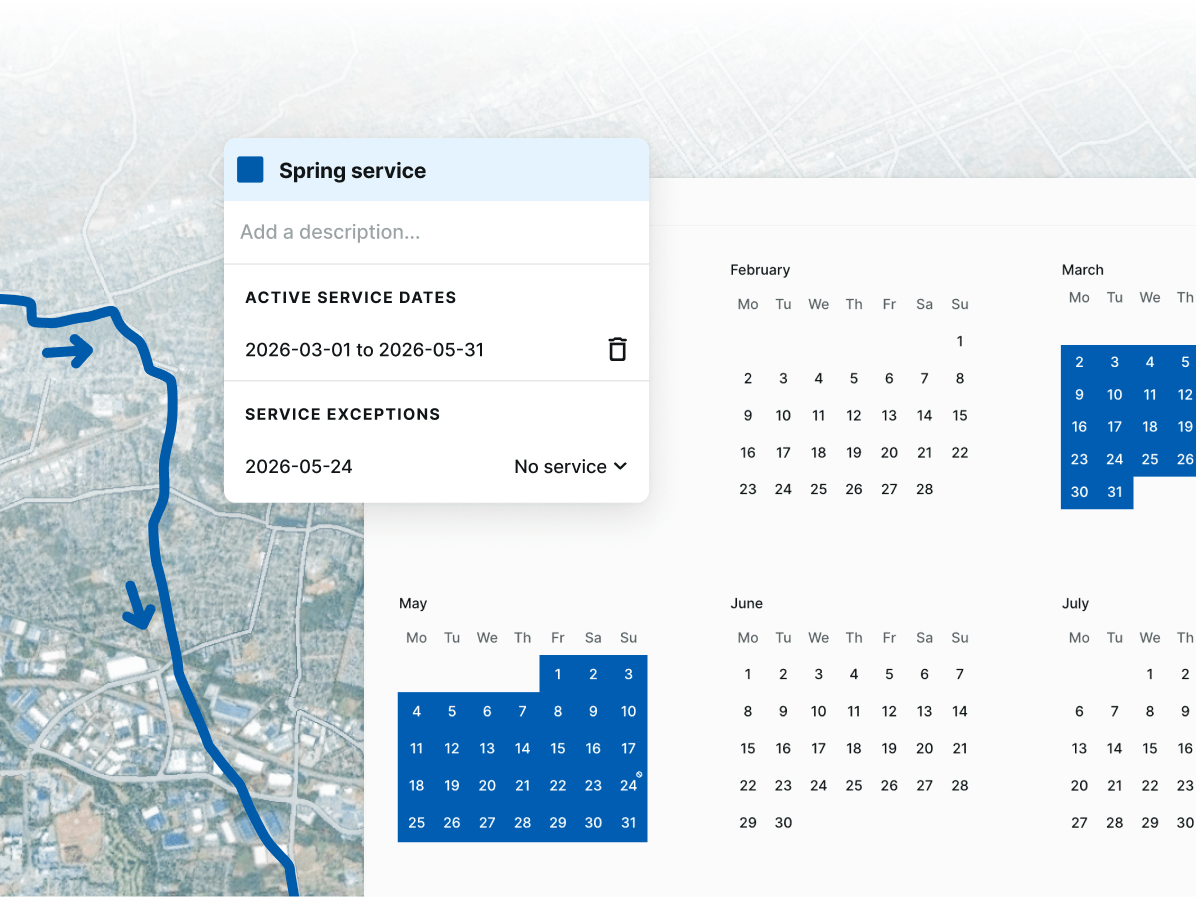
GTFS that matches what you intend to run
Export accurate, Google-ready GTFS for riders, operations, and scheduling—one source of truth across teams.
Rewrite your public transit narrative.
How to grow ridership amidst budget pressure.
Powerful AI for efficiency.
Runtimes for roads you haven’t served yet
Demand insight rooted in real movement